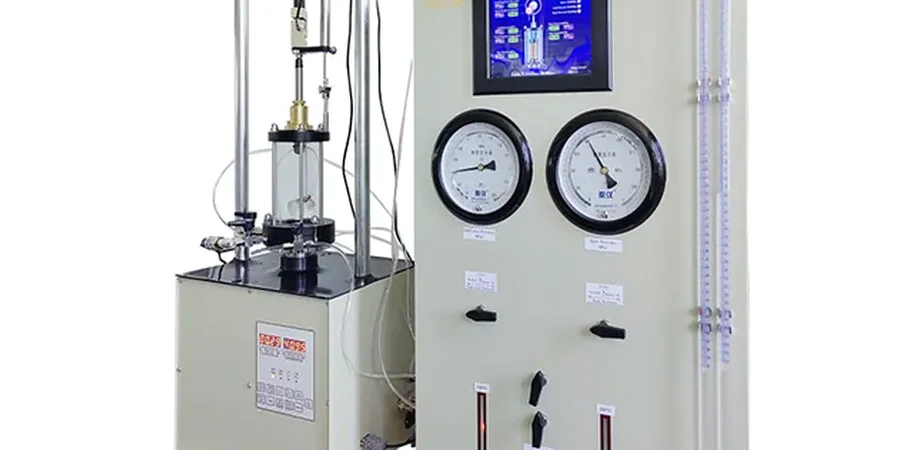
Geotechnical laboratory testing forms the backbone of any successful construction or infrastructure project in Laval, Quebec. This category encompasses a comprehensive suite of standardized tests performed on soil, rock, and aggregate samples to determine their physical, mechanical, and chemical properties. From foundation design to environmental assessments, accurate laboratory data is non-negotiable for mitigating risks such as settlement, slope instability, or bearing capacity failure. In a region like Laval, where subsurface conditions can vary dramatically over short distances, relying on empirical assumptions without rigorous lab verification can lead to costly design errors or, worse, structural distress. A well-executed laboratory program, including fundamental index tests like grain size analysis (sieve + hydrometer), provides the quantitative basis for classifying soils and predicting their behaviour under load, ensuring that engineers can tailor solutions to actual ground conditions rather than generic profiles.
The geological context of Laval is dominated by the St. Lawrence Lowlands, characterized by deep deposits of glacial till, marine clays, and alluvial sands and gravels. The post-glacial Champlain Sea inundated much of this territory, leaving behind sensitive clay formations—most notably the Leda clay—which are prone to sudden loss of strength when disturbed. These so-called 'quick clays' present unique geotechnical hazards that demand meticulous laboratory characterization. Understanding the mineralogy and structure of these deposits is critical, and tests such as Atterberg limits become essential for evaluating the plasticity and liquidity indices that govern the sensitivity of these fine-grained soils. Without precise determination of parameters like the liquid limit and plastic limit, predicting the potential for retrogressive landslides or large-scale settlements in Laval's clay belts would be speculative at best.
In Canada, and by extension Quebec, geotechnical laboratory testing must conform to standards established by the Canadian Standards Association (CSA) and the Bureau de normalisation du Québec (BNQ). The most commonly referenced framework is CSA A23, alongside ASTM International standards adapted for Canadian practice. However, for projects under provincial jurisdiction, the Ministère des Transports du Québec (MTQ) imposes its own strict protocols, outlined in the *Cahier des charges et devis généraux* (CCDG). Compliance with these norms is not merely bureaucratic; it ensures that test results are defensible, reproducible, and legally robust. For instance, grain size analysis must follow ASTM D422 or the equivalent BNQ method, while Atterberg limits are determined per ASTM D4318. Laboratories operating in Laval must maintain accreditation through programs like the Canadian Council of Independent Laboratories (CCIL) or the MTQ's own certification process, guaranteeing that equipment calibration, sample handling, and reporting meet the highest standards of practice.
A diverse array of projects in Laval depend on thorough laboratory testing programs. Residential and commercial developments in expanding sectors like Sainte-Dorothée or Chomedey require soil bearing capacity and settlement analyses to size footings appropriately. Major infrastructure initiatives—such as the extension of the Montreal Metro's Orange Line, highway interchanges on Autoroute 15, or the construction of retention basins for stormwater management—demand advanced characterization of compaction properties, permeability, and shear strength. Environmental remediation projects on former industrial lands along the Rivière des Prairies rely on laboratory tests to confirm contaminant levels and to design effective containment or treatment strategies. Even smaller-scale works, like the installation of geothermal loops or residential retaining walls, benefit from basic index testing to avoid unforeseen ground-related delays. In every case, laboratory data translates directly into safer, more economical designs by replacing conservative assumptions with site-specific evidence.
Turnaround times vary by test complexity and current laboratory workload. Simple index tests like moisture content or grain size analysis can often be completed within 3 to 5 business days. More time-intensive procedures, such as consolidation or triaxial shear tests, may require 2 to 4 weeks due to the need for prolonged saturation and loading stages. Expedited services are sometimes available for critical project deadlines, but it is advisable to discuss scheduling with the laboratory at the outset of the investigation to align with construction timelines.
Sample preservation is governed by strict protocols to prevent moisture loss, disturbance, or contamination. Undisturbed samples, typically obtained using Shelby tubes, are sealed immediately on site with wax or plastic caps and transported in shock-absorbent containers to minimize vibration. Disturbed samples are placed in airtight bags or jars. All specimens should be stored in a cool environment and delivered promptly. Chain-of-custody documentation accompanies each shipment, recording sampling depth, date, and field observations to ensure traceability from borehole to test bench.
For Laval's sensitive marine clays, a minimum suite typically includes natural moisture content, Atterberg limits, grain size analysis with hydrometer, and undrained shear strength via fall cone or unconfined compression. Consolidation testing is critical when settlement predictions are required. In zones prone to quick clay, salinity measurements and remolded strength tests may also be necessary to assess sensitivity. The specific testing program should be defined by the geotechnical engineer based on the project scope and the preliminary site stratigraphy.
Yes, accreditation is essential for ensuring the reliability and legal defensibility of test data. In Quebec, laboratories performing work for public infrastructure or regulated projects must be certified by the Ministère des Transports du Québec (MTQ) or hold CCIL certification. Accreditation confirms that the facility meets rigorous standards for equipment calibration, technician competency, and quality control. Even for private developments, using an accredited laboratory provides assurance that results follow recognized Canadian and ASTM standards, reducing the risk of disputes or design failures.